
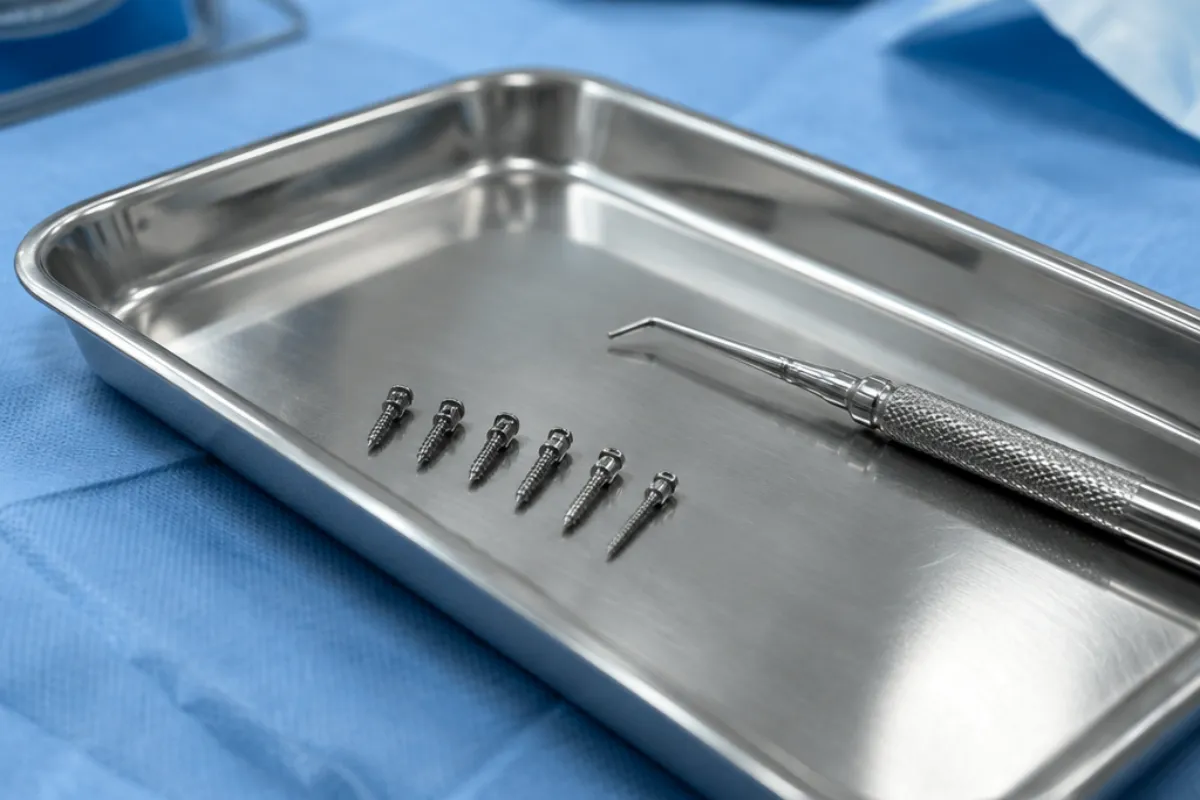
Temporary anchorage devices, or TADs, are tiny screws that an orthodontist places temporarily in the gum and bone to act as a fixed anchor point. Braces and aligners move teeth by pushing against other teeth, and a TAD gives the orthodontist a stable point that does not move, so certain teeth can be guided in directions that braces alone cannot easily achieve. TADs are removed once they are no longer needed.
If your orthodontist has mentioned temporary anchorage devices as part of your plan, you probably have questions about what they are and how they feel. This guide covers the basics for patients and parents from Yuba City to Lincoln.
How TADs Work
Every force in orthodontics has an equal and opposite reaction. When a wire or elastic pulls on one tooth, the teeth it is anchored to feel a pull too. Most of the time that works fine. But sometimes an orthodontist wants one group of teeth to move while another group stays exactly where it is. That is where a TAD helps.
The American Association of Orthodontists (AAO) describes a TAD as a tiny screw placed in the gum and bone that serves as a fixed anchor, letting the orthodontist apply force to move teeth in directions braces alone cannot. Springs, elastics, or wires are connected from the TAD to the teeth that need to move.
When an Orthodontist Might Use TADs
TADs are not needed for every patient. They are a tool for specific situations, such as:
- Closing a space while keeping neighboring teeth from drifting
- Moving back teeth backward to make room in a crowded arch
- Helping correct some open bites
- Uprighting a tooth that has tipped into a gap
- Reducing the need for headgear in some cases
Your orthodontist will explain why a TAD is being recommended for your case and what it is expected to help with. You can also read our overview on the TAD treatment page.
What Placement Is Like
Placing a TAD is usually a quick in-office visit. The area is numbed, and the orthodontist places the small screw in a planned spot, often between the roots of two teeth or in the roof of the mouth. Many patients describe feeling pressure rather than pain. Your orthodontist will review the steps, the numbing method, and aftercare with you before the visit.
The First Few Days
Some tenderness around the site is common for a short time. Soft foods, a warm salt water rinse, and over-the-counter pain relief taken as directed can help. Your cheek or tongue may notice the TAD at first, and orthodontic wax can cover it if it rubs. Call your orthodontist if soreness gets worse instead of better or the TAD feels loose.
Caring for a TAD
Keeping the area clean helps the gum around the TAD stay healthy. Simple daily habits make a difference:
- Brush gently around the TAD with a soft toothbrush
- Rinse after meals to clear food particles
- Avoid touching or wiggling the TAD with your tongue or fingers
- Skip very hard or sticky foods near the area
- Keep elastics or springs attached as instructed
How Long TADs Stay In
A TAD stays only as long as it is doing its job. Some are used for a few months to finish one specific movement, while others stay longer. When the orthodontist no longer needs the anchor, the TAD is removed in the office. Removal is typically quick, and the small spot usually heals on its own.
TADs Alongside Braces and Aligners
A TAD is a helper, not a treatment on its own. It works together with braces, and in some cases with clear aligners, to make certain tooth movements more predictable. The AAO lists TADs among the additional appliances an orthodontist may add when a case calls for it. For many patients, a TAD means a more efficient path to the planned result, but your orthodontist is the best person to explain the benefit in your specific case.
Who Might Benefit From TADs?
TADs are most often used for teens and adults whose permanent teeth are in and whose treatment includes a movement that needs extra anchorage. They can be especially useful when a patient is missing teeth, when space needs to be closed in one direction only, or when an orthodontist wants to avoid unwanted movement of teeth that are already in a good position.
Not every case needs one, and a TAD is never added just because it is available. During your consultation, the orthodontist looks at your X-rays, bite, and goals, then explains whether a TAD would make your treatment more efficient or more predictable. If a TAD is part of the plan, you will know where it will go and why before anything is placed.
Questions to Ask Before Getting a TAD
- What movement will the TAD help with?
- Where will it be placed, and how is the area numbed?
- About how long will it stay in?
- What should I do if it feels loose or sore?
Frequently Asked Questions
Most patients feel pressure rather than sharp pain during placement because the area is numbed first. Mild tenderness for a short time afterward is common and usually eases with simple home care.
No. TADs are temporary. They stay in place only as long as your orthodontist needs the anchor, then they are removed during an office visit.
Call your orthodontist. A loose TAD is not usually an emergency, but your orthodontist will want to check it and decide whether it needs to be adjusted, replaced, or removed.
Your Yuba City, CA Orthodontic Team
Dr. Michael Larson uses tools like TADs when they help a treatment plan for patients in Yuba City, Sutter County, and Lincoln. Read our Yuba City Orthodontics Google reviews, and contact our office if you have questions about your plan.