
Wearing retainers after braces is the single most important thing you can do to keep your new smile. Teeth can shift after treatment ends, and the American Association of Orthodontists (AAO) says wearing a retainer as prescribed is the best way to prevent that. Most people wear a retainer full time at first and then move to nighttime wear, and many patients will need some retainer wear long term.
May is graduation season, and many students in Yuba City, Lincoln, and across Sutter County finish treatment in time for photos and summer plans. If that is you or your teen, this guide explains the main types of retainers after braces, typical wear schedules, and how to keep them clean.
Why Teeth Shift After Treatment
The bone around your teeth is constantly being rebuilt, a process called bone remodeling. Everyday forces from biting, chewing, and speaking nudge teeth over time. Right after braces or aligners come off, the bone and gum fibers around newly moved teeth are still settling, so teeth are especially likely to drift. A retainer holds everything steady while that happens and helps protect your results over the years.
The AAO also notes that skipping retainer wear for even a few days can let teeth shift noticeably. That is why consistency matters more than anything else.
The Three Main Types of Retainers
Hawley Retainers
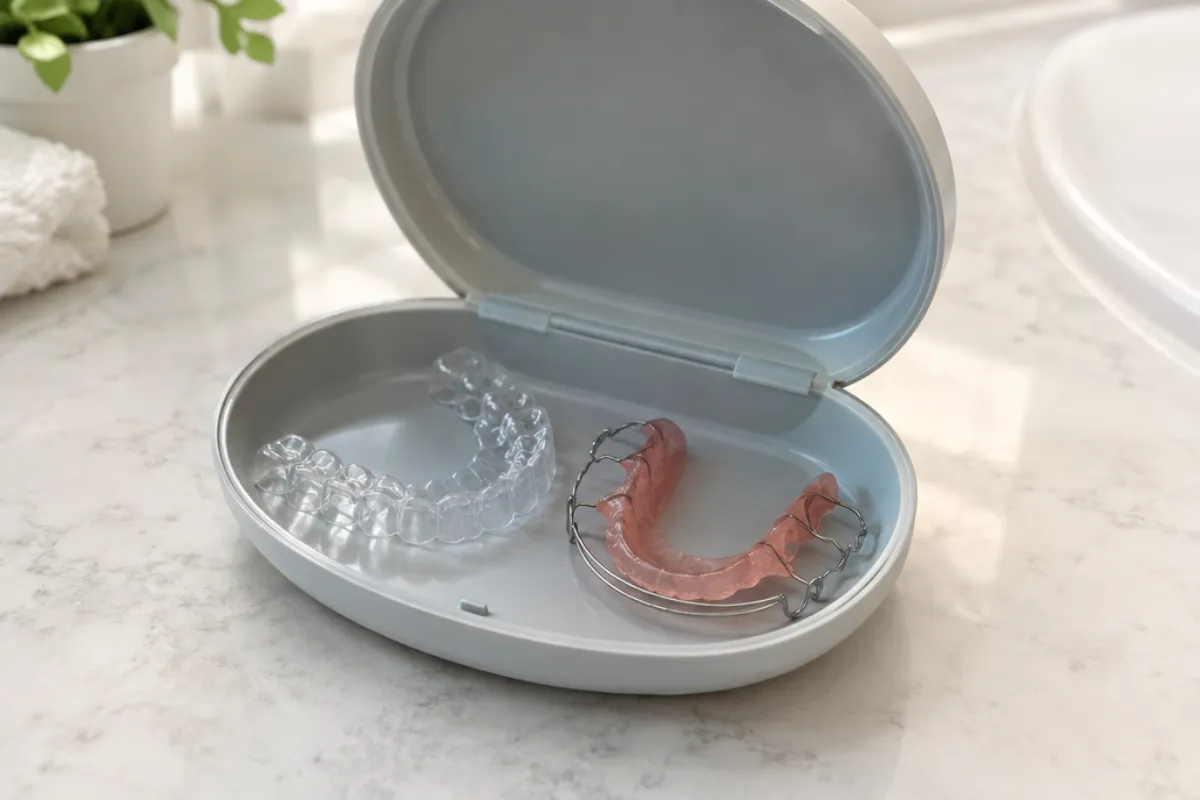
A Hawley retainer combines a shaped acrylic base that rests against the roof of the mouth or behind the lower teeth with a thin metal wire across the front teeth. It is removable, durable, and can often be personalized with colors or designs, which many kids enjoy.
Clear Retainers
Clear retainers are removable plastic trays that fit snugly over your teeth, similar in look to clear aligners. They are hard to notice when worn, which makes them popular with teens and adults. Because they cover the biting surfaces, they should come out for eating and be handled carefully to avoid cracks.
Fixed Retainers
A fixed retainer is a slender wire bonded to the back of the front teeth. It works around the clock without you having to remember it. It does take a little extra effort to floss around, and you will want to avoid very hard or sticky foods that could loosen the wire. Some patients have a fixed retainer on the lower teeth and a removable one on the upper teeth.
How Long Will I Need to Wear My Retainer?
Your orthodontist will give you a schedule based on your case. A common pattern looks like this:
- Full-time wear right after braces or aligners come off, except when eating and cleaning
- A gradual move to nighttime-only wear once your teeth are stable
- Ongoing nighttime wear for the long term, as recommended
The AAO notes that many patients will likely need retainers for life. Think of it like a seatbelt for your smile: a small daily habit that protects a big investment.
How to Clean and Care for Your Retainer
A clean retainer is more comfortable and lasts longer. The AAO recommends a few simple habits:
- Brush removable retainers daily with a soft toothbrush and water
- Consider a weekly soak in a retainer-cleaning solution
- Avoid hot water, alcohol, and bleach, which can warp or damage the material
- Always store it in its case when it is not in your mouth
- Take removable retainers out to eat, and brush before putting them back in
Wrapping a retainer in a napkin at a restaurant or school lunch is one of the most common ways it gets thrown away by accident. Keeping the case with you solves that problem. For more everyday tips during and after treatment, visit our life with braces page.
What to Do if Your Retainer Is Lost or Does Not Fit
If your retainer is lost, cracked, or suddenly feels tight or loose, call your orthodontist right away rather than waiting for your next visit. Do not force a retainer that no longer fits, since that can be uncomfortable and may damage it. The AAO points out that replacing a retainer costs far less than retreatment, and acting quickly helps keep shifting to a minimum.
Retainer Habits That Protect Your Results
Building a routine is the easiest way to stay consistent. Keep your case next to your toothbrush, put your retainer in as part of your bedtime routine, and bring the case with you when you travel. Pets, especially dogs, are known for chewing retainers, so keep the case closed and out of reach. If you notice a fixed retainer wire feels loose or a tooth feels different, let your orthodontist know so it can be checked.
Frequently Asked Questions
Many patients need some retainer wear long term, often at night. Your orthodontist will tell you how often to wear it as your teeth become more stable.
It depends on your bite, your habits, and how your teeth moved during treatment. Hawley, clear, and fixed retainers all work well when worn as directed.
A tight retainer can mean your teeth have started to shift. Do not force it in. Call your orthodontist so they can check the fit and recommend next steps.
Your Yuba City, CA Orthodontic Team
Dr. Michael Larson and our team help patients in Yuba City, Sutter County, and Lincoln keep their results for years after treatment. Read our Yuba City Orthodontics Google reviews, and contact our office if you need a retainer check or a replacement.